
RAG Agents Explained: The Future of AI-Powered Knowledge Systems in 2026
Author: Technovez Research Team
Publisher: Technovez.com
Reading Time: 12 Minutes
Updated: June 2026
RAG Agents Explained: How Retrieval-Augmented Generation Is Transforming AI Applications
Artificial Intelligence has evolved rapidly over the past few years. While Large Language Models (LLMs) like ChatGPT, Claude, Gemini, and other AI systems have become remarkably capable, they still face one major challenge: knowledge limitations and hallucinations.
This is where RAG Agents (Retrieval-Augmented Generation Agents) come into play.
RAG Agents combine the reasoning power of AI models with real-time knowledge retrieval, enabling businesses to build intelligent systems that provide accurate, context-aware, and up-to-date responses.
In this guide, we'll explore what RAG Agents are, how they work, their architecture, benefits, use cases, implementation strategies, and why they are becoming a cornerstone of modern AI applications.
Quick Answer
What is a RAG Agent?
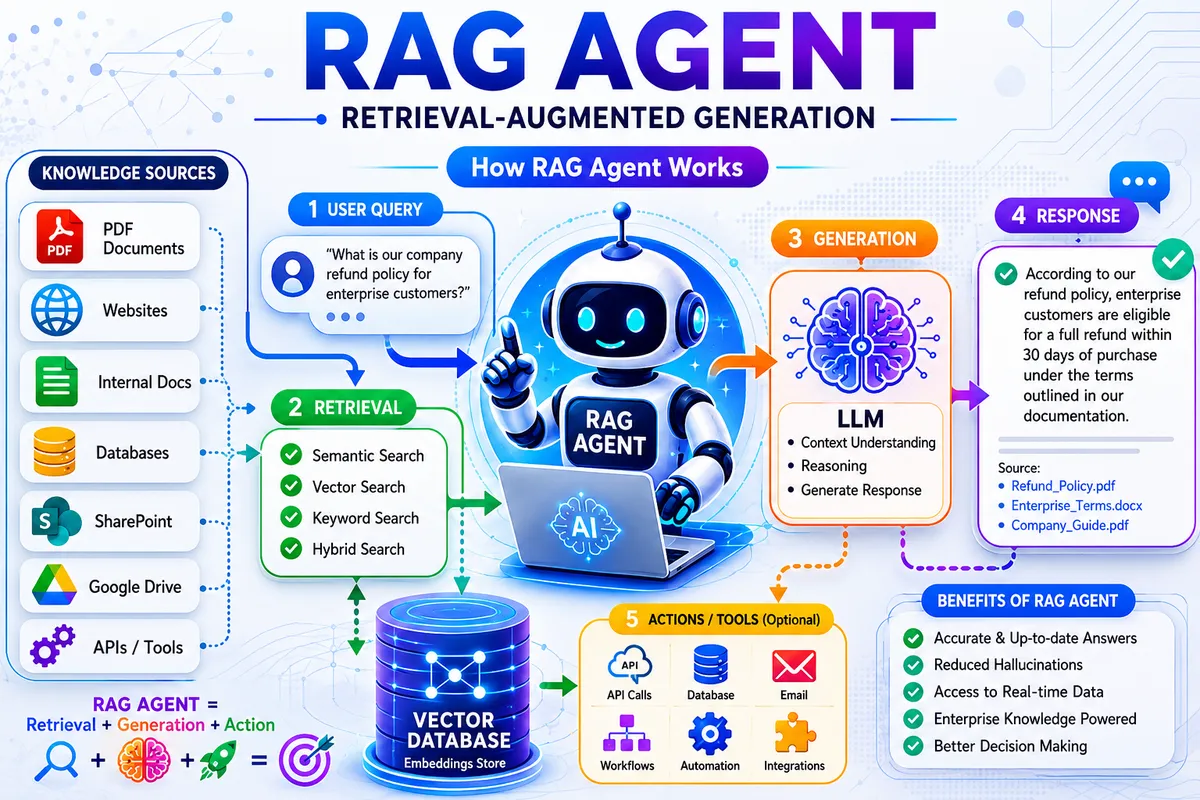
A RAG Agent is an AI-powered system that:
- Understands a user's request.
- Retrieves relevant information from external knowledge sources.
- Analyzes the retrieved information.
- Generates an accurate response using an LLM.
- Optionally takes actions using tools, APIs, workflows, or databases.
Unlike traditional AI chatbots that rely solely on training data, RAG Agents can access real-time and organization-specific information, making them more reliable and useful for business applications.
What Does RAG Stand For?
RAG = Retrieval-Augmented Generation
The concept consists of two key stages:
Retrieval
The system searches:
- Internal company documents
- PDFs
- Knowledge bases
- Websites
- Databases
- CRM systems
- Product documentation
- APIs
Generation
The retrieved information is supplied to the LLM, which then generates a contextual and accurate response.
This significantly reduces hallucinations and improves factual accuracy.
Why Traditional LLMs Are Not Enough
Traditional AI models suffer from several limitations:
| Problem | Impact |
| Outdated Knowledge | Cannot access recent information |
| Hallucinations | Can generate incorrect facts |
| No Business Context | Doesn't know company-specific data |
| Limited Personalization | Generic responses |
| Compliance Risks | Potentially inaccurate outputs |
For organizations deploying AI in production, these limitations create operational risks.
RAG Agents solve these challenges by connecting AI systems to trusted data sources.
How a RAG Agent Works
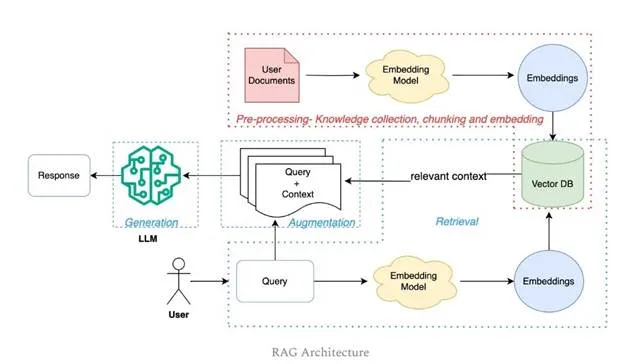
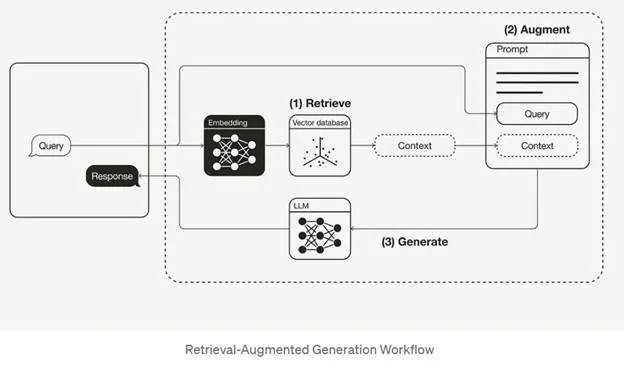
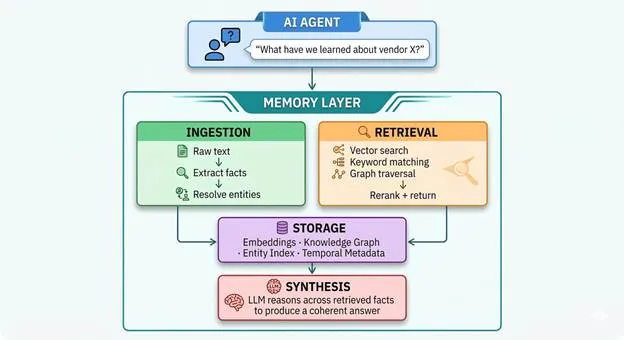
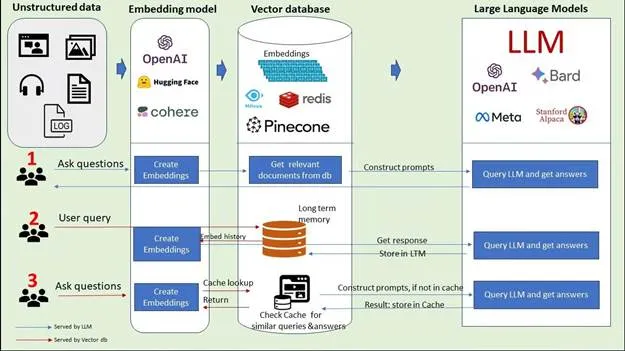
A typical RAG Agent follows these steps:
Step 1: User Query
User asks:
"What is our company's refund policy for enterprise customers?"
Step 2: Query Understanding
The AI analyzes:
- Intent
- Context
- Keywords
- Required information
Step 3: Information Retrieval
The system searches:
- Vector databases
- Knowledge repositories
- Documentation systems
- CRM records
- Internal databases
Step 4: Context Assembly
Relevant information is gathered and ranked based on relevance.
Step 5: AI Reasoning
The LLM analyzes retrieved content and creates a response.
Step 6: Action Execution (Optional)
Advanced RAG Agents can:
- Create tickets
- Send emails
- Update CRM records
- Trigger workflows
- Call APIs
RAG Agent Architecture
A production-grade RAG Agent generally includes:
1. User Interface Layer
Examples:
- Web Chat
- Slack Bot
- Teams Assistant
- Mobile Application
2. Orchestration Layer
Handles:
- Agent reasoning
- Workflow execution
- Tool selection
Popular frameworks include:
- LangGraph
- LangChain
- CrewAI
- AutoGen
- Semantic Kernel
3. Retrieval Layer
Responsible for:
- Semantic search
- Hybrid search
- Document retrieval
4. Vector Database
Stores embeddings for efficient retrieval.
Popular choices:
- Pinecone
- Weaviate
- Qdrant
- Chroma
- Milvus
5. Knowledge Sources
Examples:
- PDFs
- SharePoint
- Notion
- Google Drive
- Websites
- Databases
6. LLM Layer
Examples:
- GPT Models
- Claude Models
- Gemini Models
- Open Source LLMs
RAG Agent vs Traditional Chatbot
| Feature | Traditional Chatbot | RAG Agent |
| Real-Time Knowledge | No | Yes |
| Company Data Access | Limited | Yes |
| Accuracy | Medium | High |
| Hallucination Risk | High | Low |
| Workflow Automation | Limited | Advanced |
| Enterprise Ready | Partial | Yes |
Winner: RAG Agent
Key Benefits of RAG Agents
Improved Accuracy
Responses are grounded in retrieved documents rather than assumptions.
Reduced Hallucinations
The AI references actual information sources.
Lower Training Costs
Organizations do not need expensive model retraining.
Faster Updates
Simply update the knowledge base.
No model retraining required.
Enterprise Security
Sensitive information remains within controlled systems.
Better User Experience
Users receive:
- Relevant answers
- Personalized responses
- Context-aware assistance
Real-World RAG Agent Use Cases
Customer Support
AI agents can answer:
- Product questions
- Refund requests
- Troubleshooting issues
using company documentation.
Healthcare Knowledge Assistants
Medical staff can search:
- Clinical guidelines
- Treatment protocols
- Internal documentation
faster and more accurately.
Legal Research
Law firms use RAG systems to retrieve:
- Case laws
- Contracts
- Regulations
before generating legal summaries.
Internal Enterprise Search
Employees can ask:
"What is the latest remote work policy?"
and receive instant answers.
E-Commerce
RAG Agents can:
- Recommend products
- Track orders
- Answer FAQs
- Provide inventory information
Sales Enablement
Sales teams can retrieve:
- Product specifications
- Competitive analysis
- Pricing documents
instantly.
Building a RAG Agent: Step-by-Step Guide
Step 1: Define Business Objectives
Ask:
- What problem are we solving?
- Who will use the agent?
- What data sources are required?
Step 2: Collect Knowledge Sources
Gather:
- PDFs
- Documentation
- Databases
- Web pages
- CRM records
Step 3: Create Embeddings
Convert content into vector embeddings for semantic search.
Step 4: Store in a Vector Database
Choose a vector database based on:
- Scalability
- Performance
- Cost
Step 5: Implement Retrieval Logic
Configure:
- Similarity search
- Metadata filtering
- Hybrid retrieval
Step 6: Connect an LLM
Use:
- GPT
- Claude
- Gemini
- Open-source alternatives
Step 7: Add Agent Capabilities
Integrate:
- APIs
- Automation tools
- Databases
- Workflow engines
Step 8: Monitor and Optimize
Track:
- Retrieval accuracy
- Response quality
- User satisfaction
- Latency
Common Challenges in RAG Systems
Poor Document Quality
Garbage in = Garbage out.
Maintain clean knowledge sources.
Weak Chunking Strategies
Incorrect document chunking reduces retrieval quality.
Vector Search Errors
Low-quality embeddings lead to poor results.
Context Window Limitations
Too much retrieved data can overwhelm the model.
Security and Permissions
Ensure users access only authorized information.
RAG Agent Best Practices for 2026
Use Hybrid Search
Combine:
- Semantic search
- Keyword search
for better results.
Implement Re-ranking
Rank retrieved results before generation.
Add Source Citations
Display sources used for responses.
Monitor Hallucinations
Continuously evaluate output quality.
Use Agentic Workflows
Enable agents to:
- Plan
- Reason
- Retrieve
- Execute actions
autonomously.
Future of RAG Agents
Industry experts predict that RAG Agents will become the standard architecture for enterprise AI systems.
Future developments include:
- Multi-agent RAG systems
- Autonomous knowledge discovery
- Real-time learning architectures
- Personalized AI assistants
- Agent-to-agent communication
- Enterprise AI operating systems
Organizations adopting RAG today are positioning themselves for the next wave of AI transformation.
Frequently Asked Questions (FAQ)
What is the difference between RAG and fine-tuning?
Fine-tuning modifies the model itself.
RAG retrieves external information and injects it into the prompt before generation.
Are RAG Agents better than ChatGPT?
RAG Agents are not replacements for ChatGPT. Instead, they extend LLM capabilities by providing access to current and organization-specific information.
Which vector database is best for RAG?
Popular choices include:
- Pinecone
- Qdrant
- Weaviate
- Milvus
- Chroma
The best option depends on scale, budget, and deployment requirements.
Can RAG Agents access real-time data?
Yes.
They can retrieve information from APIs, databases, websites, and enterprise systems in real time.
Are RAG Agents suitable for small businesses?
Absolutely.
Modern AI platforms make it possible for startups and SMBs to implement RAG-based solutions without significant infrastructure investments.
Conclusion
RAG Agents represent one of the most significant advancements in applied AI. By combining retrieval, reasoning, and action capabilities, they enable organizations to build intelligent systems that are accurate, trustworthy, and scalable.
Whether you're building customer support assistants, enterprise search solutions, legal research tools, healthcare assistants, or AI-powered business workflows, RAG Agents provide a practical framework for delivering reliable AI experiences.
As AI adoption accelerates throughout 2026 and beyond, businesses that invest in Retrieval-Augmented Generation architectures will gain a competitive advantage through better knowledge management, improved customer experiences, and more effective automation.
Author Statement:
This article is developed by Technovez.com to help businesses, developers, and AI professionals understand modern Retrieval-Augmented Generation (RAG) architectures and their role in enterprise AI systems.